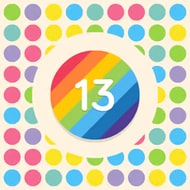
Impossible 13 looks like a slow, tidy number puzzle from the first screenshot, but it plays like a fast-decaying grid that punishes hesitation. The board fills with small colored circles carrying numbers, and the only way to survive is merging three or more matching circles into the next value up the chain. What reads as calm color-matching turns into constant triage once the low numbers stop clearing fast enough and the grid starts running out of room.
| Genre |
Number-merge puzzle |
| Platforms |
Browser, mobile |
| Goal |
Merge circles up to 13 and beyond |
| Session Length |
Endless, score-based |
The Core Merge Mechanic in Plain Terms
Every circle on the board carries both a color and a number. Grouping three or more circles that share the same number merges them into a single circle worth one number higher, and the game rewards you for planning several merges ahead rather than clearing whatever group is closest. Early on, ones and twos pile up fast and merging them feels almost automatic.
The real game starts once you’re managing fours, fives, and sixes at the same time as new ones and twos keep spawning underneath them. Letting low numbers sit unmerged for even a few turns is what causes most boards to fill up and end a run.
Where New Players Lose Their First Runs
The most common beginner mistake is clearing whatever merge is available immediately instead of checking whether waiting one turn sets up a bigger chain. Impossible 13 rewards patience with the low numbers specifically, since a rushed three-circle merge now can block a five-circle chain reaction that would have cleared far more space.
The second mistake is ignoring board edges. Circles pushed into corners are easy to forget about, and a forgotten pocket of low numbers is usually what fills the last open space and ends the run right when the score was climbing.
How Difficulty Actually Escalates
Nothing about the rules changes as a run goes on — the board doesn’t add new pieces or new colors. What changes is density: by the time your average circle value reaches seven or eight, the board has far less open space to stage the next merge, and every new low-numbered circle that spawns is competing for room with values you’re still trying to promote. That’s the part that divides players — some find the escalating density the whole appeal, others find it feels like the board is simply against you once space runs out, since a single unlucky spawn pattern can end a strong run through no real misplay.
Chain Merges Most Players Miss
Stacking two matching groups so that one merge immediately completes a second is where high scores actually come from, and it’s rarely accidental. Players who track the board for near-complete groups a few numbers apart, rather than reacting to whatever is closest, are the ones who chain three or four promotions off a single move.
Common Questions About Impossible 13
- Why does the board fill up even when I keep merging? Low-value circles spawn faster than most players clear them, so a board fills up when ones and twos get ignored in favor of chasing bigger merges near the middle of the grid.
- Is there a trick to reaching 13 consistently? Consistently reaching 13 in Impossible 13 comes from holding back an easy merge until it lines up with a second group, turning one small clear into a chain that promotes several values at once.
- Does corner placement actually matter? Yes — circles pushed into corners are easy to lose track of, and a forgotten corner pocket is one of the most common reasons a board suddenly has nowhere left to spawn.
Whether a given run in Impossible 13 ends at a modest six or pushes well past the number 13 milestone comes down to whether the corners were managed and whether a merge was held back one extra turn for a bigger chain — the rules never change, only how much room is left to use them.